

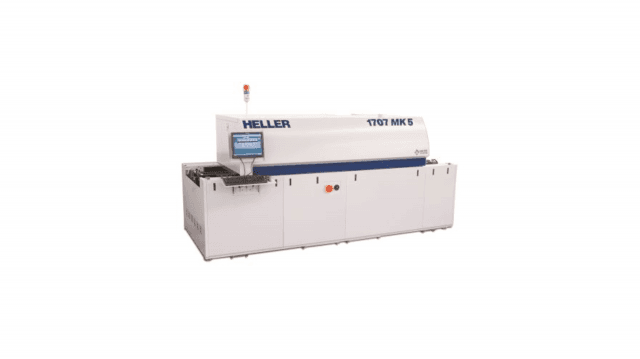
Want to know the key SMT challenges in automotive electronics that most manufacturers face? This blog is for you.
SMT assembly is a crucial part of automotive electronics, enabling compact, high-density, reliable circuit boards that power everything from ECUs and infotainment to advanced ADAS features, enabling smaller, lighter components, faster production, and better performance.
The automotive industry is constantly undergoing transformation driven by advances in electronics that enhance vehicle functionality and the user experience.
However, manufacturers face various challenges in automotive electronics, including extreme miniaturisation, high-reliability requirements, complex components, and thermal management on high-density boards.
At the core of this revolution, HJE Tech India Private Limited plays a pivotal role in developing smarter, safer, and more efficient solutions.
In this blog, we'll explore the key SMT challenges manufacturers face in automotive electronics and the best practices to avoid them.
A Complete Guide to SMT Challenges in Automotive Electronics
Key SMT Challenges in Automotive Electronics
1. Extreme Environmental Stress
Automotive PCBs must withstand temperature cycles ranging from 40°C to 150°C. Imagine a PCB inside an engine bay during a long summer drive. The heat is relentless.
Key stress-related challenges include:
- Solder joint fatigue due to thermal cycling
- Component cracking under vibration
- PCB warpage in high-heat zones
2. Higher Reliability Requirements
Unlike consumer gadgets, automotive electronics must meet AEC-Q standards and stringent zero-defect expectations. Even a tiny SMT misalignment or a micro-void in solder can become a risk on the road.
Automotive reliability demands:
- Perfect solder deposition consistency
- Accurate pick-and-place for miniature components
- No room for cold solder or voiding
Manufacturers must adopt meticulous inspection at every step, SPI, AOI, and even X-ray checks for hidden solder issues.
3. Mixed Component Complexity
Automotive boards often combine:
- Power MOSFETs
- BGA packages
- Fine-pitch ICs
- Heavy connectors
- Miniature passives
Handling these mixed technologies presents unique SMT challenges in automotive electronics, including reflow profiling, stencil design, and pick-and-place optimisation.
4. Moisture Sensitivity & Component Shelf Life
Moisture-sensitive devices (MSDs) are standard in automotive ECUs. If not handled properly, they can cause damage.
Risks include:
- Internal delamination
- Die cracking
- Voiding and poor wetting
Controlled storage, dry cabinets, and precise baking cycles are non-negotiable.
5. Traceability & Compliance
Every automotive PCB must be fully traceable, from stencil batch and solder paste lot number to each component reel and PCB panel.
Traceability impacts:
- Warranty management
- Root-cause analysis
- Compliance reporting
- Supplier accountability
An SMT line without proper traceability simply isn't automotive-ready.
Best Practices to Overcome Automotive SMT Challenges
1. Use Automotive-Grade Materials & Solder Paste
Select high-reliability solder paste and components rated for automotive thermal and mechanical conditions.
Tips:
- Choose low-voiding solder formulations
- Stick to AEC-Q compliant components.
- Use appropriate flux systems for high-temp environments.
2. Controlled Reflow Profiling
Automotive boards benefit from tighter temperature control.
Best practices include:
- Profile separately for dense and power-heavy PCBs
- Ensure slow, even heating to avoid warpage.
This helps maintain solder uniformity even on complex, mixed-component boards.
3. Advanced Inspection & Defect Detection
A combination of SPI, AOI, and X-ray should be standard practice.
Why?
- Solder Paste Inspection (SPI) catches paste issues early
- Automated Optical Inspection (AOI) inspects placements and solder joints visually
- X-ray reveals hidden issues in BGAs, QFNs, and dense areas.
For zero-defect automotive expectations, multi-level inspection is crucial.
4. Proper MSD Handling & Storage
- Use <5% RH dry cabinets
- Track floor-life using barcode systems
- Avoid over-baking, which can damage IC packaging.
5. Implement Smart Factory Solutions
Automation and software integration significantly reduce errors.
Smart SMT practices include:
- Real-time line monitoring
- Automated recipe switching
- Closed-loop printer - SPI feedback
- MES integration for traceability
This ensures repeatability and maintains automotive-grade consistency.
6. Continuous Operator Training
Even the best SMT line fails without skilled engineers and operators.
Training focus:
- Solder paste behaviour
- Reflow troubleshooting
- Component handling
A minor calibration error or a stencil mishandling can delay production for hours.
The Bottom Line
Automotive electronics are only getting smarter day by day. But, as vehicles evolve, so do SMT challenges in automotive electronics, from thermal stress to component reliability and full-scale traceability. Manufacturers who adopt robust processes, advanced inspection, and data-driven production control can consistently deliver high-performance automotive PCBs.
If your automotive electronics production requires expert-level SMT solutions, HJE Tech India Private Limited is here to help.
From precision SMT conveyors and PCB handling equipment to inspection systems and automation solutions, HJE Tech India Private Limited supports end-to-end efficiency for modern automotive manufacturing.
Ready to upgrade your SMT line for automotive-grade performance? Contact HJE Tech India Private Limited today.
Disclaimer: This content is for informational purposes only and is written by a professional content writer. Contact us to learn more about SMT assembly.